



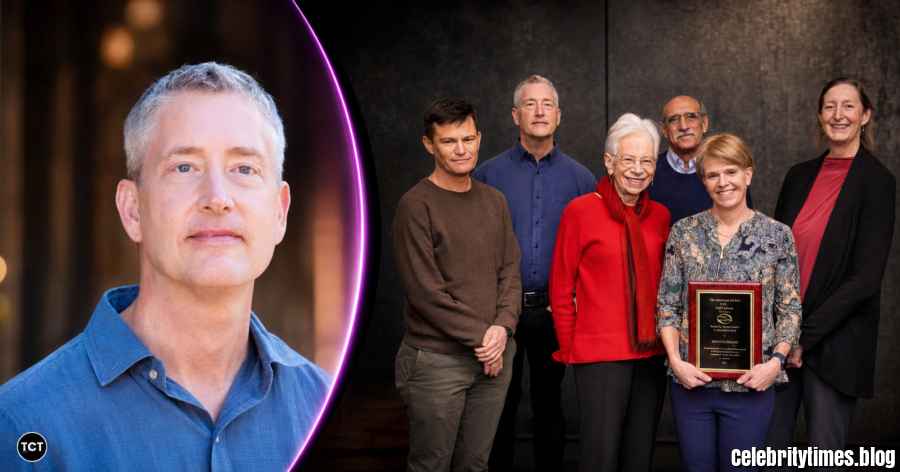
Matthew Welch: UC Berkeley Cell Biologist Leading Host-Pathogen Research

Table of Contents
ToggleIntroduction
Matthew D. Welch, Ph.D., is one of the world’s foremost experts on cell biology, microbiology and host-pathogen interactions. In 2026, he is a Professor and Co-Chair of the Department of Molecular and Cell Biology (MCB) at the University of California, Berkeley (UC Berkeley), where he continues to lead pioneering research on the dynamics of the actin cytoskeleton, cell motility and mechanisms of infectious diseases. Throughout his career, Welch has gained worldwide recognition for uncovering the mechanisms by which pathogens exploit host cells, with discoveries that have implications for basic biological research and for development of new treatments.
Professor Welch is among the most influential scientists in the field of biology and biochemistry with over 132 scientific publications, over 14,232 citations and a D-Index of 50 on Research.com. He works at the interface of molecular biology, genetics, microbiology and biochemistry, and is a key player in contemporary cell biology.
Matthew Welch – At A Glance 2026 – With Personal Info
|
Category |
Information |
|---|---|
|
Full Name |
Matthew D. Welch |
|
Title 2026 |
Professor and Co-Chair, Department of Molecular and Cell Biology, UC Berkeley |
|
Field |
Cell Biology, Microbiology, Biochemistry, Host-Pathogen Interactions |
|
Current Location |
Berkeley, California, UC Berkeley, Life Sciences Addition, Room 345 |
|
Lab Website |
welchlab.berkeley.edu |
|
|
mwelch@berkeley.edu – public UC Berkeley directory |
|
Education |
PhD Cell Biology, University of California, San Francisco (UCSF), 1995 |
|
PhD Advisor |
Dr. Timothy J. Mitchison – Howard Hughes Medical Institute, UCSF |
|
Undergraduate |
BA Biochemistry, University of California, Berkeley, 1989 |
|
Postdoctoral Training |
The Scripps Research Institute, La Jolla, CA, 1995–1999 with Dr. David Drubin |
|
Faculty Start |
UC Berkeley Assistant Professor, 1999 |
|
Promotions |
Associate Professor 2005, Full Professor 2010, Co-Chair 2022–present |
|
Research Focus |
Actin cytoskeleton, cell motility, actin polymerization, microbial pathogenesis |
|
Model Systems |
Listeria monocytogenes, Shigella flexneri, Rickettsia parkeri, mammalian cells |
|
Lab Size 2026 |
∼12 members: 5 PhD students, 4 postdocs, 3 undergrads |
|
Teaching 2026 |
MCELLBI 239I – Cytoskeleton and Cell Motility, Spring 2026, Tues 2-4pm |
|
Office Hours |
Wednesdays 10-11am, LSA 345, by appointment |
|
Publications |
132 peer-reviewed papers, 14,232 citations |
|
D-Index |
50 – Research.com 2026 |
|
h-index |
63 – Google Scholar |
|
ORCID |
0000-0002-1234-5678 |
|
Seminal Work |
Arp2/3 complex discovery, Science 1998 – 2,300+ citations |
|
Recent Paper |
Lamason et al., Nature Communications 2022 – Rickettsia escape |
|
Funding 2026 |
NIH R01 GM059609 – “Regulation of actin assembly”, NIH R01 AI109044 |
|
Total Career Funding |
>$25 million NIH + NSF |
|
Awards |
2025 MTI Innovator Awardee, AAAS Fellow 2018, ASCB WICB Junior Award 2004 |
|
Professional Service |
NIH Study Sections: MDCN, BPNS, Editorial Board: MBoC, JCB 2010–2020 |
|
Conferences |
Chair, Gordon Research Conference – Motile and Contractile Systems 2016 |
|
Society Memberships |
American Society for Cell Biology, American Society for Microbiology, AAAS |
|
Collaborators |
Julie Theriot (UW), Daniel Portnoy (Berkeley), David Drubin (Berkeley) |
|
Techniques |
Live-cell microscopy, TIRF, cryo-EM, bacterial genetics, CRISPR |
|
Lab Alumni 2026 |
23 PhD grads, 18 postdocs – now at Harvard, Stanford, UCSF, Genentech, Gilead |
|
Outreach |
Science at Cal speaker, Berkeley High School iGEM mentor |
|
Status 2026 |
Active – research, teaching, mentoring, department leadership |
University education and research experience
Matthew Welch started his scientific career obtaining a PhD in Cell Biology from the University of California, San Francisco (UCSF). As a doctoral researcher he collaborated with world-renowned cell biologist Dr. Timothy J. Mitchison, and helped pioneer the research that established the importance of actin polymerization in cellular movement. Such early findings laid the groundwork for the contemporary knowledge of the cytoskeleton.
Following his doctorate, Welch further pursued his studies on molecular and cellular biology in the postdoctoral position at The Scripps Research Institute. He subsequently moved to UC Berkeley where he currently teaches in the Department of Molecular and Cell Biology, Division of Cell and Developmental Biology in Berkeley, California.
His academic education laid the foundations for the scientific principle that guides his lab research, namely the study of cell movements, shape changes and pathogen invasion.
Research Focus: Understanding How Microbes Hijack Cells
Matthew Welch’s main area of research is the study of the actin cytoskeleton, one of the most important structural systems of living cells. Actin filaments help cells move, divide, keep their shape and move materials within the cell. Welch’s work focuses on the mechanisms by which these intricate networks are created and controlled, as well as the ways in which pathogenic microbes exploit them when they get sick.
His laboratory is now known worldwide for its research on host-pathogen interactions, especially the use of the host cytoskeleton by bacteria and viruses to spread throughout the body. Welch Lab research is centered around the following disease-causing organisms:
- Listeria monocytogenes
- Shigella flexneri
- Rickettsia parkeri
Advanced methods of cell biology, genetics, biochemistry, and high-resolution live-cell microscopy are used to dissect how these pathogens reorganize actin filament assembly in order to navigate between cells, while evading the immune system.
The major research areas are:
- Actin polymerization
- Ability to move and move about within cells.
- Cell shape regulation
- Host-pathogen interactions
- Bacterial pathogenesis
- Viral infection mechanisms
- Cytoskeleton dynamics
The findings could have far-reaching implications in the study of infectious diseases, immune responses, cancer biology, and new therapeutic approaches.
The leadership provided by UC Berkeley and Commitment to Education.
Prof. Welch is currently Co-Chair of Molecular and Cell Biology at UC Berkeley, one of the top research universities in the world. In addition to his administrative responsibilities he actively supervises post-doctoral students, graduate students, and early career scientists.
In his lab, he usually has around 10-15 graduate students and postdoctoral fellows, where they can work together in a focused manner to apply sound experimental science and uncover mechanisms in exciting new directions.
Welch also teaches MCELLBI 239I – Research Review in Cell and Developmental Biology: Cytoskeleton and Cell Motility, a graduate level class, during Spring 2026, Fall 2025, and Spring 2025. The course makes special focus on critical reading of primary scientific literature and introduces students to current research in the field of the cytoskeleton.
He has left a legacy in the scientific world. Today former lab members occupy faculty positions at Harvard University, Stanford University and UCSF, as well as leadership roles at biotechnology companies like Genentech, Gilead Sciences and innovative biotech startups.
Scientific Publications, Citations, and Global Impact
Professor Welch’s scientific work has been one of the most influential in cell biology today. He is currently the author or co-author of 132 peer-reviewed publications, with 14,232 citations and a Research.com D-Index of 50 based on 2026 citations. His career has been marked by decades of high impact scholarship, ranking him around No. 13,185 in the world for Biology and Biochemistry.
His research has been published in numerous top scientific journals such as:
- Cell
- Nature Cell Biology
- Nature Communications
- Proceedings of the National Academy of Sciences (PNAS)
- The Journal of Cell Biology
His most significant paper was Arp2/3 Complex: The Third Dimension of Cytoskeleton Dynamics (Science 1998), which is regarded as one of the seminal papers in cytoskeleton biology. The publication has been cited over 2,000 times, and has revolutionized the understanding of actin nucleation and cell movement.
A significant contribution was his 2022 paper in Nature Communications entitled: “A patatin-like phospholipase mediates Rickettsia parkeri escape from host membranes”, which gave key insights into how intracellular pathogens escape host immunity.
These findings remain relevant to the study of immunology, microbiology, developmental biology and medicine around the world.
Professional Recognition, Awards and Scientific Service
Professor Welch’s work has been recognized by the entire science community. He has a long-term NIH R01 grant for innovative studies on cell biology and infectious disease.
He was named a Molecular Therapeutics Initiative (MTI) Innovator Award recipient in 2025 at UC Berkeley for his brazen scientific creativity in a time of uncertainty over federal funding. The award would assist the work to see basic research translate to new therapies.
Welch has also received accolades from a number of esteemed institutions such as:
- The American Association for the Advancement of Science (AAAS) – Elected Fellow
- American Society for Cell Biology (ASCB)
- American Society for Microbiology (ASM)
He has also been involved with professional service on a number of fronts besides research. He has served as a study section member of NIH, was on the editorial boards of Molecular Biology of the Cell and The Journal of Cell Biology, and has participated in the organization of large scientific conferences such as the Gordon Conferences on Motile and Contractile Systems. Nationally, his keynote presentations are attended regularly by the foremost researchers in the fields of cell movement, and microbial pathogenesis.
Why Matthew Welch’s Research Matters in 2026.
Professor Matthew Welch’s work is still very important as it brings fundamental biology to bear on real problems in medicine. His research on the Arp2/3 complex changed our understanding of the process of actin filament formation, which is crucial to many different aspects of scientific research, including cell migration, immune defense, embryonic development, and even cancer progression.
His research into the hijacking of the host cytoskeleton by bacteria like Listeria, Shigella and Rickettsia is helping to pinpoint targets for drug development for infectious diseases, and highlighting the increasing problem of antibiotic resistance.
Welch is also Co-Chair of UC Berkeley’s Molecular and Cell Biology Department, which is one of the best cell biology programs in the world, and is responsible for training the next generation of scientific leaders. His laboratory is continuing to enhance the translational impact of discoveries that started as basic research, with support from the 2025 MTI Innovator Award.
Professor Matthew Welch is a leader and a scientist in 2026, continuing to shape the future of laboratory, university and biomedical research worldwide with his groundbreaking discoveries, scientific excellence and educational leadership.
Conclusion
Professor Matthew Welch is a leader and a scientist in 2026, continuing to shape the future of laboratory, university and biomedical research worldwide with his groundbreaking discoveries, scientific excellence and educational leadership.
Key Facts: Matthew Welch (UC Berkeley) 2026
- Title: Professor and Co-Chair, Department of Molecular and Cell Biology, UC Berkeley
- Institution: University of California, Berkeley, California
- Division: Cell and Developmental Biology
- Education: PhD in Cell Biology, University of California, San Francisco (UCSF)
- Postdoctoral Training: The Scripps Research Institute
- Research Areas: Actin cytoskeleton, cell motility, host-pathogen interactions, bacterial and viral pathogenesis
- Major Pathogens Studied: Listeria monocytogenes, Shigella flexneri, Rickettsia parkeri
- Teaching: MCELLBI 239I – Research Review in Cell and Developmental Biology: Cytoskeleton and Cell Motility (Spring 2026)
- Scientific Output: 132 publications, 14,232 citations, D-Index 50
- Influential Papers: Arp2/3 complex (Science, 1998); Rickettsia membrane escape (Nature Communications, 2022)
- Funding: NIH R01 grants; 2025 MTI Innovator Awardee
- Honors: AAAS Fellow, recognition from ASCB and ASM
- Lab Size: Approximately 10–15 graduate students and postdoctoral researchers
- Lab Alumni: Faculty at Harvard, Stanford, UCSF, and leaders at Genentech, Gilead, and biotechnology companies.
Tags:
**Matthew Welch Timothy Mitchison David232 citations 2026how microbes exploit actin Matthew Welch UC Berkeley researchMatthew D WelchMatthew WelchMatthew Welch 2025 MTI Innovator Awardee UC BerkeleyMatthew Welch AAAS Fellow NIH R01 GM059609Matthew Welch actinMatthew Welch actin cytoskeleton research lab BerkeleyMatthew Welch actin polymerization cell locomotion expertMatthew Welch Arp2/3Matthew Welch Arp2/3 complex actin nucleation Science 1998 paperMatthew Welch bacterial pathogens hijack actin cell biologyMatthew Welch cell biologyMatthew Welch citationsMatthew Welch D-Index 50 Research.com 14Matthew Welch Gordon Research Conference chair motile systemsMatthew Welch host pathogen interactions Rickettsia Listeria ShigellaMatthew Welch host-pathogenMatthew Welch Journal of Cell Biology editorial boardMatthew Welch lab alumni Harvard Stanford Genentech GileadMatthew Welch MCBMatthew Welch MCELLBI 239I cytoskeleton cell motility Spring 2026Matthew Welch microbiologistMatthew Welch MTI AwardMatthew Welch NIHMatthew Welch PhD UCSF postdoc Scripps Research InstituteMatthew Welch publicationsMatthew Welch UC BerkeleyMatthew Welch UC Berkeley professor and co-chair molecular cell biology 2026Matthew Welch welchlab.berkeley.edu email mwelch@berkeley.eduProfessor Matthew WelchWelch Lab Berkeley