



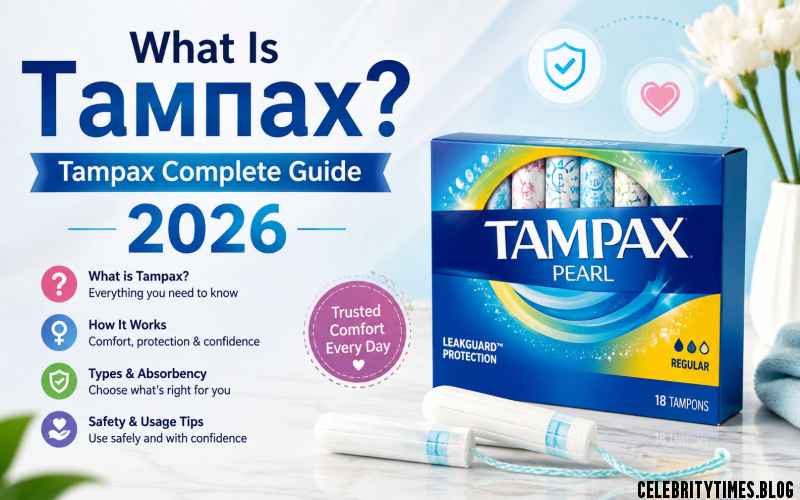

If you are searching for “тампас”, you may actually mean Tampax, the well-known brand of menstrual tampons. The word “тампас” is commonly used as an informal or mistaken spelling of Tampax. A tampon is a menstrual hygiene product made from absorbent material such as cotton, rayon, or a blend of fibers, designed to absorb menstrual blood inside the vagina.
Tampax is associated with Procter & Gamble (P&G) and has a long history in menstrual care. The important thing for users is not simply the brand name but knowing how to choose the appropriate absorbency, insert the product correctly, change it regularly, and recognize potential warning signs.
What Is Тампас? Is It Tampax?
Тампас is generally used to refer to Tampax, while the generic product is called a tampon. Tampax is an American menstrual-hygiene brand that became associated with applicator tampons and is currently part of the Procter & Gamble portfolio.
Tampons are inserted into the vagina during menstruation, where they absorb menstrual flow. They are available in different absorbency levels and designs, allowing users to choose a product according to their menstrual flow and personal preference.
Tampax has roots dating back to 1931, making it one of the longest-established tampon brands. The official brand website is Tampax.com, although product availability and specific product ranges vary by country.
Types of Тампас and Tampax in 2026
Choosing the correct tampon absorbency is important. The general categories include Light, Regular, Super, and Super Plus, although exact product names and absorbency ranges vary by market.
- Light: Generally intended for lighter menstrual flow.
- Regular: Commonly used for moderate flow.
- Super: Designed for heavier flow.
- Super Plus: Intended for very heavy flow.
Tampax products may also differ by construction. Applicator tampons include an applicator that helps with insertion and can be convenient for beginners. Non-applicator tampons are smaller and can be more compact to carry.
There are also products marketed as organic tampons, including options made with cotton. Always read the package to confirm the materials and absorbency rather than assuming that every Tampax product has the same composition.
How to Use a Tampon Correctly
Correct use is one of the most important parts of tampon safety. Before inserting a tampon, wash your hands and choose a comfortable position. Relaxing the pelvic muscles can make insertion easier, especially if you are using a tampon for the first time.
With an applicator tampon, gently guide it into the vagina according to the package instructions. The tampon should sit comfortably inside the vagina, while the removal string remains outside. It should not normally cause significant pain when correctly positioned.
A tampon should generally be changed according to the manufacturer’s instructions and not left in for more than 8 hours. Use the lowest absorbency that adequately manages your menstrual flow. If you are sleeping for longer than the recommended maximum wear time, consider using a menstrual pad or another suitable product instead.
Never force a tampon into place. If insertion is consistently painful or impossible, speaking with a healthcare professional can help identify the reason.
Is Тампас Harmful or Safe?
For most people, tampons are safe when used correctly. However, like other menstrual products, they have safety considerations. The most important is toxic shock syndrome (TSS), a rare but potentially serious condition that has been associated with tampon use.
The risk can be reduced by following the product instructions, using the lowest suitable absorbency, and changing tampons regularly. Do not leave a tampon in longer than the recommended maximum time.
Possible symptoms of TSS can include sudden fever, dizziness, fainting, vomiting, diarrhea, muscle aches, or a rash resembling sunburn. If these symptoms occur while using a tampon, remove the tampon and seek urgent medical attention.
Some common myths are also misleading. A tampon generally cannot become permanently lost inside the vagina because the vagina ends at the cervix. Also, tampon use does not inherently determine whether someone is a virgin; however, insertion can sometimes stretch or irritate vaginal tissue, and cultural definitions of virginity vary.
Тампас vs. Menstrual Pads: Which Is Better?
There is no single menstrual product that is best for everyone. Tampons and pads have different advantages, and many people use both depending on the situation.
| Tampons | Menstrual Pads |
|---|---|
| Discreet under clothing | Easy to use without insertion |
| Useful for swimming and sports | Convenient for overnight use |
| No external feeling of moisture | Available in many sizes and absorbencies |
| Provides freedom of movement | No TSS risk associated with tampon use |
| Requires correct insertion and regular changing | Can feel bulky for some users |
For an active lifestyle, a tampon can be particularly convenient because it can be used during swimming and exercise. Pads may be preferable for people who do not want to insert menstrual products or who want a simple option for sleeping.
Tampax Price and Where to Buy in 2026
Prices for Tampax products in 2026 depend heavily on country, retailer, product type, package size, and availability. The supplied information gives approximate Russian prices of 350–500 rubles for Tampax Compak packs of around 16–18 pieces and 600–800 rubles for a 32-piece Tampax Pearl pack.
These figures should be treated as indicative rather than fixed 2026 prices, because retail prices change and products may not be officially available in every market.
When buying tampons, choose a reputable pharmacy, supermarket, established retailer, or verified online seller. Be cautious with unusually cheap products and inspect packaging for damage, missing information, or signs of counterfeiting.
Final Verdict: Is Тампас Worth Buying?
If by тампас you mean Tampax or tampons generally, they can be a convenient menstrual-hygiene option for people who want freedom of movement, discreet protection, and the ability to swim or exercise during menstruation.
The most important points are simple: choose the lowest appropriate absorbency, follow the package instructions, maintain hand hygiene, and never leave a tampon in longer than recommended. Beginners may find an applicator design easier to use, while experienced users may prefer compact non-applicator products.
There is no requirement to use tampons if you prefer pads or another menstrual product. The best choice is the one that is comfortable, safe, and appropriate for your body and menstrual flow.
FAQs About Тампас
Are тампас and Tampax the same thing?
Тампас is commonly used as a mistaken or informal spelling of Tampax. Tampax is a brand, while tampon is the generic name for the menstrual product.
At what age can someone use tampons?
There is no universal minimum age. A person can generally use tampons from the beginning of menstruation if they feel comfortable and can follow safe-use instructions. A healthcare professional can provide guidance if there are concerns.
Can you swim with a tampon?
Yes. Tampons can be convenient for swimming and other physical activities. Remember to follow the product’s recommended replacement schedule.
Can a tampon get lost inside the body?
A tampon cannot travel indefinitely through the body. The vagina is a closed muscular canal ending at the cervix. If a tampon becomes difficult to remove, do not force it; seek medical assistance.
What is the safest tampon absorbency?
Use the lowest absorbency that adequately handles your menstrual flow. Using a higher absorbency than necessary can increase dryness and discomfort.